
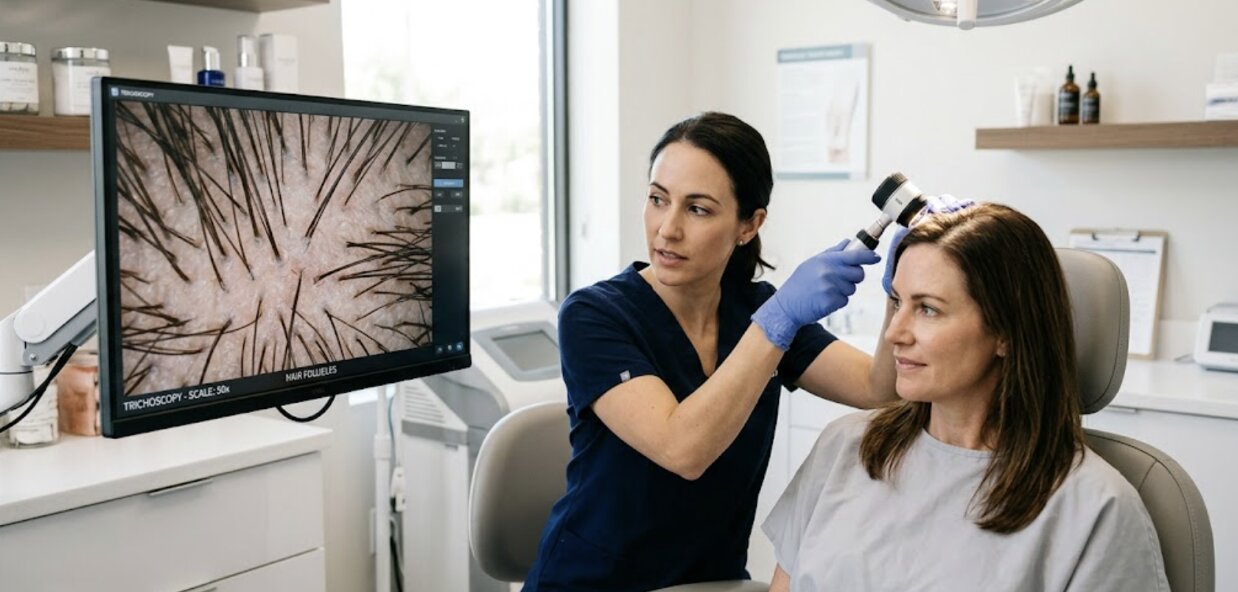
Hair loss is common, but that does not make it easy. It can affect how you show up at work, in photos, even in everyday conversations. Most people try products first. Some help a little, many don’t. The difference comes down to choosing treatments backed by medical research and tailored to you.
If you are looking for hair restoration treatment in Lyndhurst, NJ, you are likely searching for something real, not guesswork.
At Inspire Med Spa, treatment starts with understanding your body, not just your symptoms. You get a plan built around your hair, your health, and your goals.
What You’ll Learn From This Article
Before we go deeper, here is exactly what you will walk away with after reading this guide. This is not surface level advice, it is grounded in real medical insight so you can make informed decisions.
- The real causes of hair loss, including genetic, medical, and lifestyle factors
- How to identify early warning signs before thinning becomes severe
- The most effective non-surgical treatments, including PRP, mesotherapy, and laser therapy
- When surgery becomes the right option, and what to expect from FUE and FUT
- How different treatments compare, so you can choose what fits your condition and budget
- What actually works long term, not just short term fixes
- Simple ways to protect and support your hair, including nutrition and scalp care
You will also understand why a personalized approach matters. Hair restoration is not about trying everything; it is about choosing the right treatment at the right time.
What Causes Hair Loss? A Closer Medical Look
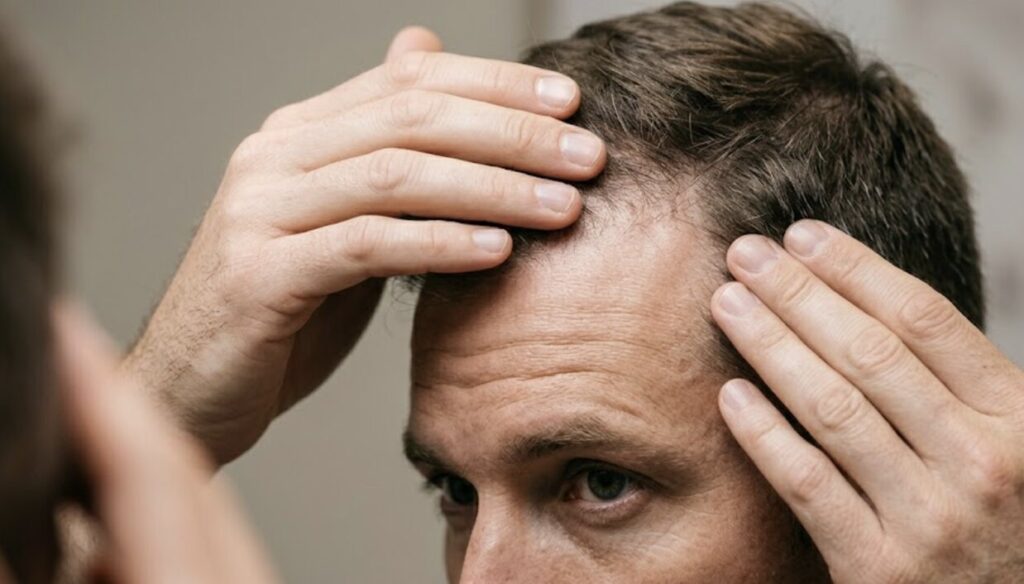
Hair loss rarely comes from a single cause. You need to look at genetics, health, and daily habits together to understand what is happening.
Genetic Hair Loss (Androgenetic Alopecia)
This is the most common type. It affects both men and women. Your follicles become sensitive to DHT, a hormone that shrinks them over time.
You might notice:
- A receding hairline
- Thinning at the crown
- Gradual loss of density
This process is slow, which is actually a good thing. It gives you time to act early.
Medical Conditions That Trigger Hair Loss
Some conditions directly affect hair growth. These include:
- Alopecia areata, where the immune system attacks the follicles
- Thyroid disorders that disrupt hormone balance
- Chronic illness that affects nutrient levels
According to the National Center for Biotechnology Information, identifying the underlying cause is critical before starting treatment.
Lifestyle Factors You Might Overlook
Your daily habits matter more than you think. Stress, diet, and styling all play a role.
Common triggers:
- High stress levels that disrupt the hair cycle
- Low iron or vitamin deficiencies
- Tight hairstyles or excessive heat
Important: Hair loss is often a combination of factors. Treating only one piece may not give results.
Aging and Hair Cycle Changes
Hair naturally changes with age. Growth slows down, and follicles become less active.
You may notice:
- Thinner strands
- Slower regrowth
- Less volume overall
This is normal, but it can still be treated and managed.
Why Diagnosis Comes First
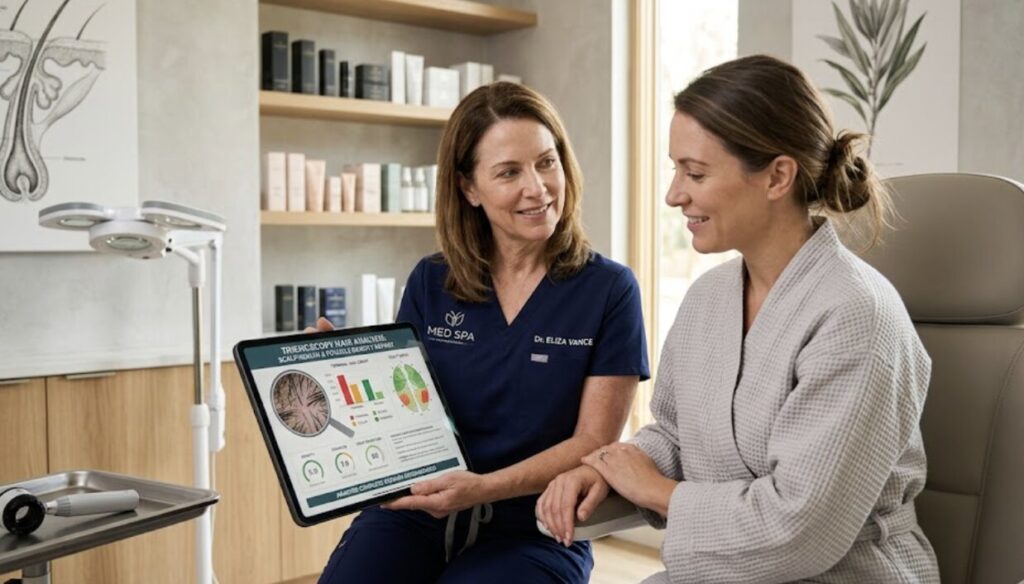
Before choosing any treatment, you need clarity. Guessing leads to wasted time and money.
Scalp and Follicle Analysis
Before starting treatment, we carefully assess your hair loss pattern, scalp condition, and overall hair density during your consultation. We also document your starting point with before and after photography so we can accurately track progress over time.
This evaluation helps us observe:
- Areas of thinning
- Changes in density
- Hair growth progress throughout treatment
Comparing photos over time gives you a clearer picture of how your hair responds to treatment and helps guide future recommendations.
Medical History and Hormone Check
Your history tells a big part of the story. We look at:
- Hormonal balance
- Family history
- Medications
Skipping this step is one of the biggest mistakes people make.
Personalized Treatment Planning
At Inspire Med Spa, your plan is built around your biology. Not a template, not a guess.
We also consider your lifestyle and long-term goals. That balance is what creates natural results that last.
Non-Surgical Hair Restoration Treatments
These options work well for early to moderate hair loss. They also support surgical results.
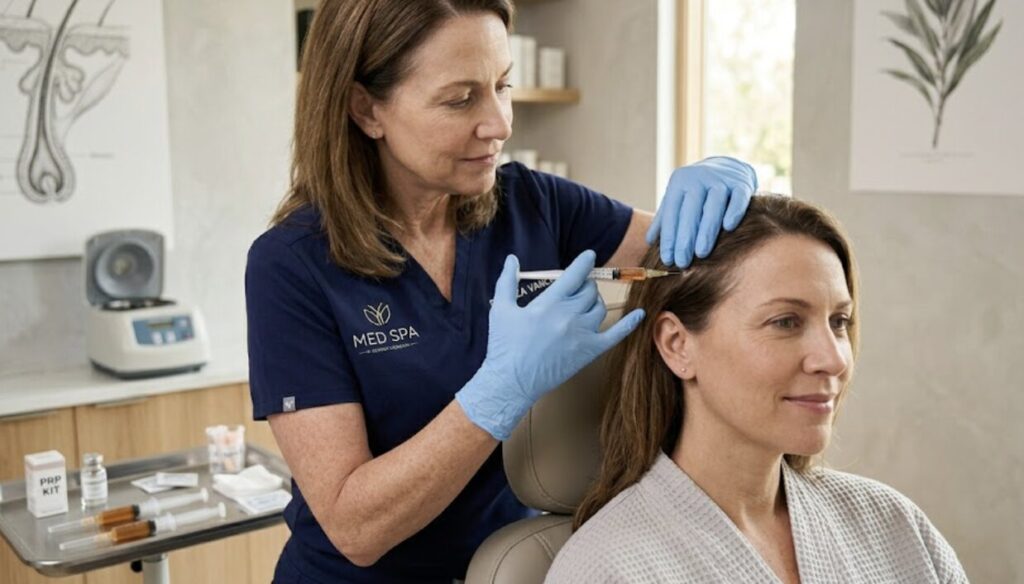
Platelet-Rich Plasma (PRP) Therapy
PRP uses your own blood to stimulate hair growth. We isolate platelets and inject them into your scalp. These platelets release growth factors that activate dormant follicles. Research published in Frontiers in Medicine supports the use of PRP for androgenetic alopecia.
What you can expect:
- Minimal downtime
- Gradual improvement over 3 to 6 months
- Better results with multiple sessions
KeraLase
For patients who want a more advanced, non-surgical approach, combination therapies like KeraLase (LaseMD Ultra + KeraFactor MD) offer a broader strategy.
These treatments combine multiple methods in one plan:
- Laser technology to improve scalp absorption
- Topical growth serums to nourish follicles
- Microneedling to stimulate collagen and improve delivery
- Supportive therapies that enhance overall scalp health
The goal is simple. Improve the environment around the follicle so it can function properly again.
At the same time, non-surgical treatments such as medications, LLLT, and topical solutions work alongside these protocols to:
- Support hormonal balance
- Increase blood flow to the scalp
- Strengthen follicle activity
This layered approach tends to produce more consistent results compared to relying on a single treatment alone.
Medications
Common options include:
- Minoxidil for blood flow
- Finasteride to reduce DHT
These can be effective, but only with consistent use.
Always consult a provider before starting medication.
Minimally Invasive Hair Restoration Options
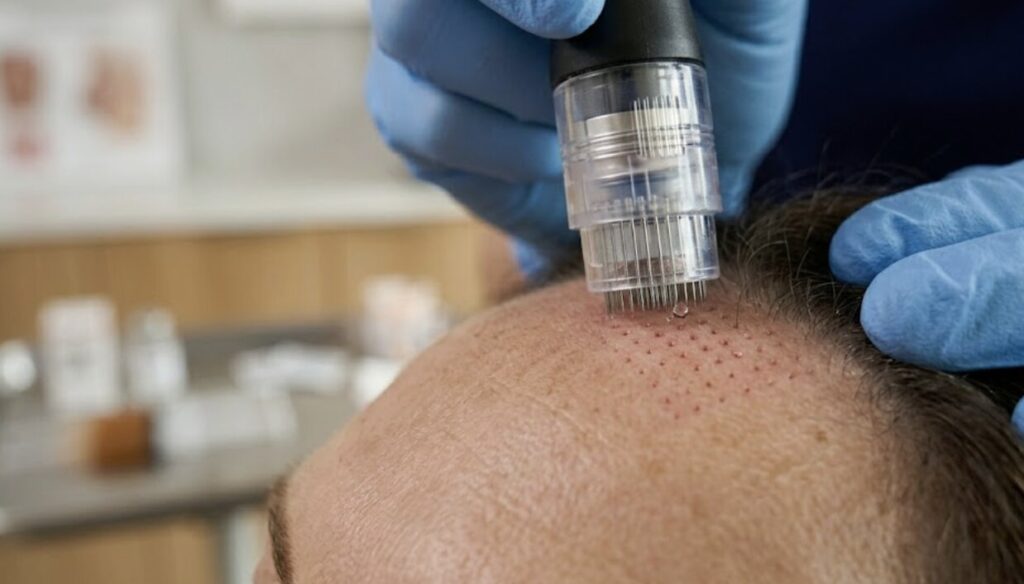
Some patients need more than basic treatments but are not ready for surgery.
Microneedling with Growth Factors
Microneedling creates tiny channels in the scalp. This boosts collagen and improves absorption of treatments.
When combined with growth factors, results can improve noticeably.
Exosome and Stem Cell Treatments
These therapies focus on cellular repair. Exosomes send signals that help follicles recover.
Research is still developing, but early results are promising.
Combination Treatments
Often, the best results come from combining methods.
Examples include:
- PRP with microneedling
- Laser therapy with medication
This approach targets multiple causes at once.
Comparing Hair Restoration Options
Choosing the right treatment depends on your condition and goals. Before we break it down, here is a simple comparison:
| Treatment Type | Best For | Invasiveness | Maintenance |
PRP Therapy | Early to moderate loss | Low | Ongoing |
KeraLase / DE I RIVE Hair Restoration | Early to moderate thinning, scalp health support | Low | Ongoing |
Mesotherapy | Weak follicles, thinning hair, scalp nourishment | Low | Ongoing |
Low-Level Laser Therapy (LLLT) | Early thinning and maintenance support | Low | Regular sessions or at-home use |
Microneedling | Moderate thinning | Low | Ongoing |
Medications | Early stages | Low | Daily use |
FUE Surgery | Advanced Loss | Moderate | Minimal after healing |
FUT Surgery | Severe Loss | Moderate | Minimal after healing |
Matching Treatment to Your Hair Loss
- Mild thinning responds well to PRP or LLLT
- Moderate loss benefits from combination therapy
- Advanced loss often needs surgery
Cost Considerations
Non-surgical treatments cost less upfront but require maintenance.
Surgical options cost more initially but can last longer.
Long Term Commitment
Hair restoration is not one and done.
Consistency is what keeps your results.
The Inspire Med Spa Approach
Treatment works best when it fits your whole lifestyle.
Treating the Whole Person
We look at your health, stress levels, and nutrition alongside your scalp.
This approach helps improve long-term results.
Natural Looking Results
You should still look like yourself. Just with fuller, healthier hair.
That balance matters more than dramatic changes.
Advanced Techniques and Expertise
We use refined methods that focus on precision and subtle improvements.
Your Care Journey
You start with a consultation. From there, we guide you through each step, including follow-up care.
You are never left guessing what comes next.
Preventing Further Hair Loss
Treatment is only part of the process. Prevention matters just as much.
Nutrition and Supplements
Your hair needs proper nutrients to grow.
Key ones include:
- Iron
- Vitamin D
- Zinc
- Biotin
Scalp Care
Healthy follicles need a healthy environment.
Keep your scalp clean and avoid harsh treatments.
Stress and Lifestyle
Stress can push hair into a resting phase.
Focus on:
- Better sleep
- Regular exercise
- Stress management
Frequently Asked Questions
1. What is the most effective hair restoration treatment?
It depends on your condition. PRP works well for the early stages. FUE surgery gives strong results for advanced hair loss.
2. How long does PRP take to work?
You usually see improvement within 3 to 6 months. Results build gradually.
3. Are results permanent?
Surgical results last longer, but you still need maintenance. Non-surgical treatments require ongoing sessions.
4. Is hair restoration safe?
Most treatments are safe when performed by qualified professionals. Your medical history still needs to be reviewed first.
5. How do I choose the right treatment?
You need a proper evaluation. Scalp analysis and medical review help determine the best plan for you.
Choosing the Right Hair Restoration Path in Lyndhurst, NJ
Hair loss can feel frustrating, but you do have options that work. The key is choosing hair restoration treatments based on medical evidence, not trends.
Start with a proper diagnosis. Follow a plan designed for your specific condition. Stay consistent with treatment and maintenance.
That is how you get results that look natural and last.