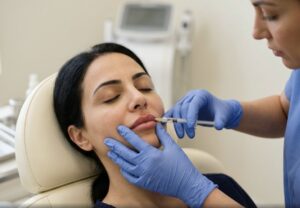

Fine lines can appear before someone feels ready for them. A slight crease between the brows, forehead lines that stay after expression, or crow’s feet that look deeper in photos can make the face appear more tired than it feels.
That is why so many people compare Dysport vs. Botox before booking an injectable treatment. Both options can help soften wrinkles and fine lines caused by repeated facial movement, but they are not the same product. The right choice depends on your treatment area, facial muscles, timeline, budget, and the kind of result that feels natural to you.
At Inspire Med Spa in Lyndhurst, Bergen County, NJ, the focus is not on changing your face. The goal is to help you look refreshed, polished, and confident while honoring your natural features.
What You’ll Learn From This Article
-
- How Botox and Dysport work on expression lines
-
- The key differences between Botox and Dysport, including onset, spread, and units
-
- Which treatment areas may respond well to each injectable
-
- Why Botox cost and Dysport cost should not be compared by unit price alone
-
- What safety points and treatment limitations should you understand before booking
-
- How a consultation helps determine which wrinkle treatment is right for you
Understanding Botox and Dysport
Botox and Dysport are both injectable treatments used to soften the look of dynamic wrinkles. Dynamic wrinkles form when facial muscles contract repeatedly over time. Common examples include frown lines between the eyebrows, forehead lines, and crow’s feet near the eyes.
Both products are forms of botulinum toxin type A. In simple terms, they work by temporarily reducing the nerve signals that tell specific facial muscles to contract. When those muscle contractions soften, the skin over the treated area may look smoother.
A 2010 international consensus paper on the use of aesthetic botulinum toxin type A discusses its role in upper facial wrinkles and emphasizes careful technique, anatomy, and dosing to support safe treatment planning.
What Botox Is
Botox Cosmetic is the brand name for onabotulinumtoxinA. It is FDA-approved for the temporary improvement in the appearance of moderate to severe frown lines, crow’s feet lines, forehead lines, and platysma bands in adults. The FDA prescribing information explains its indications, dosing, precautions, and possible adverse reactions.
Botox is often chosen when the provider wants precise placement in a specific treatment area. For patients who want softening without losing natural expression, that precision can matter.
What Dysport Is
Dysport is the brand name for abobotulinumtoxinA. It is also a botulinum toxin type A injectable. For cosmetic use, Dysport is FDA-indicated for the temporary improvement in the appearance of moderate to severe frown lines between the eyebrows in adults under 65.
Dysport is known for treating glabellar lines, often called “11 lines.” Some providers also discuss Dysport when a patient wants a softer effect across a broader area, although the final recommendation depends on anatomy, dose, dilution, and injector technique.
Both treatments share the same general purpose, but the details can shape your result.
Key Differences Between Botox and Dysport

The main differences between Botox and Dysport include formulation, units, spread, onset, and FDA-approved treatment areas. These differences do not make one product better for everyone. They simply help guide the treatment plan.
Formulation and Units
Botox and Dysport are measured differently. A unit of Botox is not the same as a unit of Dysport. This is one of the most important points to understand when comparing Botox cost, Dysport units, Botox units, or a quoted treatment price.
For example, the FDA labeling for Botox Cosmetic lists 20 units for glabellar lines, while the Dysport labeling lists 50 units for the same indication. That does not mean Dysport is “more” treatment in a direct way. It means each product has its own dosing system.
A research review comparing botulinum toxin products also notes that different formulations have distinct clinical characteristics and should not be treated as interchangeable:
Spread and Treatment Area
Spread refers to how the injectable moves around the injection area after placement. Dysport is often described as having a broader spread than Botox, while Botox is often discussed for its targeted precision.
This does not mean Dysport always spreads too much or Botox always stays in one tiny spot. The actual effect depends on several factors, including:
-
- Injection technique
-
- Dose
-
- Dilution
-
- Muscle strength
-
- Treatment area
-
- Individual facial anatomy
For treating larger areas, Dysport may be considered. For areas where the provider wants highly focused placement, Botox may be considered. A skilled injector looks at how your face moves before choosing the product.
Onset and Full Effects
Dysport may start working more quickly than Botox for some patients. Botox usually begins developing over several days, with results becoming more noticeable during the first week. The full effects of either injectable treatment are not immediate.
This is important when planning around a wedding, family event, vacation, or professional photos. If you are new to Botox or Dysport, it is usually wise to schedule well in advance of a major occasion so your provider can evaluate your results without rushing.
Botox vs Dysport Comparison Table
| Comparison Point | Botox | Dysport | What It Means |
| Product type | Botulinum toxin type A | Botulinum toxin type A | Both temporarily reduce selected muscle activity |
| Common cosmetic use | Frown lines, crow’s feet, forehead lines, platysma bands | Frown lines between the eyebrows | FDA-approved areas differ |
| Units | Botox units | Dysport units | Units are not interchangeable |
| Onset | Develops over several days | May appear faster for some patients | Timing varies |
| Spread | Often used for precise placement | Often discussed for broader diffusion | Technique and anatomy matter |
| Typical duration | Often, about 3 to 4 months | Often, about 3 to 4 months | Results vary by person |
| Best choice | Depends on goals and anatomy | Depends on goals and anatomy | Consultation gives the clearest answer |
Once these differences are clear, the next question is how they apply to the areas people usually want treated.
Treatment Areas: Forehead Lines, Frown Lines, and Crow’s Feet

Most patients compare Botox and Dysport because they want smoother expression lines while still looking like themselves. The treatment area plays a major role in determining which product is appropriate.
Frown Lines Between the Eyebrows
Frown lines form between the eyebrows when the corrugator and procerus muscles contract. These lines can make the face appear tense, focused, or tired even when the person feels calm.
Both Botox and Dysport may be discussed for this area. Dysport and Botox Cosmetic are both approved to treat moderate to severe frown lines between the eyebrows in adults. Dysport is specifically approved for adults under 65.
For this treatment area, placement matters. The provider must soften the frown muscles while protecting the natural brow position and expression.
Forehead Lines
Forehead lines appear when the frontalis muscle lifts the brows. This area requires a thoughtful plan because the forehead helps lift the brows. Too much relaxation can create heaviness, especially in patients who naturally rely on the forehead to lift the brow area.
Botox Cosmetic is FDA-approved for moderate-to-severe forehead lines in adults, according to the FDA label and official Botox Cosmetic treatment area information.
A natural-looking forehead treatment should soften lines while keeping enough movement for normal expression.
Crow’s Feet
Crow’s feet form around the outer corners of the eyes when smiling, squinting, or laughing. These lines are often associated with warmth and expression, so many patients prefer a softer look rather than a fully still appearance.
Botox Cosmetic is FDA-approved for moderate to severe lateral canthal lines, commonly called crow’s feet. Dysport may be discussed in some practices for areas beyond glabellar lines, but FDA-approved cosmetic indications differ by product, so a provider should explain what is being recommended and why.
The best result usually comes from matching the product and dose to the way your face naturally moves.
Dysport vs Botox Results: Onset, Duration, and Expectations

Results are one of the main factors people consider when comparing Dysport and Botox in Lyndhurst, NJ. Patients often want to know which works faster, which lasts longer, and which looks more natural.
When Results May Start to Show
Dysport may show early softening sooner for some patients. Botox typically begins to show changes over several days. Neither treatment creates an instant final result.
The Botox Cosmetic label notes that muscle relaxation begins after injection and develops over time. Dysport labeling also makes clear that treatment effects are temporary and should be spaced appropriately.
A good rule for patients is to allow time. If a special event is coming up, your provider can help you choose a treatment date that gives the result time to settle.
How Long Results Typically Last
Botox results often last around 3 to 4 months for many patients. Dysport results also typically last in a similar range, although individual responses vary. Dysport labeling notes that treatment should not be repeated more often than every 3 months.
Duration can depend on:
-
- Muscle strength
-
- Product dose
-
- Treatment area
-
- Metabolism
-
- Previous injectable history
-
- Exercise habits
-
- Facial movement patterns
-
- Maintenance schedule
Some patients prefer a little movement after treatment. Others want a smoother effect. Those preferences should be part of the consultation.
What Results Should Look Like
A thoughtful injectable treatment should help the face look refreshed rather than unfamiliar. At Inspire Med Spa, this fits the practice’s focus on natural enhancements, refined care, and confidence that still feels personal.
Botox and Dysport can soften wrinkles and fine lines, but they do not address every skin concern. Lines caused by skin laxity, volume loss, sun damage, or changes in texture may require a different treatment plan. Sometimes the best plan includes skin care, facials, microneedling, laser treatments, fillers, or other supportive options.
Clear expectations help make the consultation more productive, especially when cost is part of the decision.
Botox Cost vs Dysport Cost in Lyndhurst, NJ
Cost is a practical part of choosing between Botox and Dysport. The cleanest answer is that pricing depends on the treatment plan, not just the product name.
Why Unit Price Can Be Misleading
Because Dysport and Botox units differ, comparing prices per unit can confuse the decision-making process. Dysport treatments often use more units than Botox treatments for the same general area, but that does not automatically mean Dysport is stronger, more expensive, or more effective.
The better question is: What is the total cost for the area being treated, the required amount, and the desired result?
What Affects Botox and Dysport Cost
Several factors can affect Botox cost, or Dysport cost in Lyndhurst, NJ:
-
- Number of areas treated
-
- Strength of facial muscles
-
- Amount of product needed
-
- New treatment versus maintenance
-
- Injector experience
-
- Complexity of facial anatomy
-
- Desired level of movement
-
- Whether other treatments are part of the plan
A small frown line treatment may cost less than a plan that includes forehead lines, crow’s feet, and additional facial balancing.
Why Consultation Gives the Most Accurate Quote
A consultation allows the provider to evaluate your facial movements in person. It also gives you time to discuss your goals, concerns, budget, and timeline.
This is especially helpful if you are considering Dysport for the first time, have used Botox before, or want to switch between Botox and Dysport. The right plan should feel clear before treatment begins.
Cost matters, but so does safety and trust in the person performing the injection.
Safety, Side Effects, and Treatment Limitations
Botox and Dysport are widely used in aesthetic medicine, but they are still prescription injectable treatments. They should be performed by trained professionals who understand facial anatomy, dosing, and potential side effects.
Common Temporary Effects
Possible temporary effects may include redness, swelling, tenderness, bruising, headache, dry eye, or mild discomfort near the injection area. More specific risks can include asymmetry, eyelid drooping, brow heaviness, or unwanted muscle relaxation, depending on the area treated.
FDA prescribing information for both Botox Cosmetic and Dysport includes warnings about the possible spread of the toxin’s effects and lists important safety considerations. Patients should review these risks with their provider before treatment.
Contact a medical professional promptly if you experience symptoms such as trouble swallowing, breathing difficulty, unusual weakness, or any concerns after treatment.
Who May Not Be a Candidate
Botox or Dysport may not be right for everyone. A provider should review your health history, allergies, medications, prior reactions to injections, pregnancy or nursing status, and any neuromuscular conditions before treatment.
This is not the kind of treatment to choose based on a social media trend or a friend’s dose. Your face, medical history, and goals need their own plan.
What Botox and Dysport Cannot Do?
Botox and Dysport work best for wrinkles caused by movement. They do not replace lost facial volume. They do not tighten loose skin. They do not resurface texture or correct pigmentation.
For deeper folds, crepey skin, volume changes, acne scars, or sun-related texture concerns, your provider may discuss other options. Inspire Med Spa offers a range of beauty and wellness services, so the conversation can include injectables, skin care, laser treatments, microneedling, facials, threads, wellness support, and other options, as appropriate.
That broader view can help you choose a treatment that addresses the real concern rather than guessing.
Botox vs Dysport: Which Treatment Is Right for You?

There is no single answer that applies to every face. The right choice depends on your anatomy, muscle movement, treatment area, past results, and personal style.
When Botox May Be Considered
Botox may be considered when the treatment plan calls for precise placement. It may be a good option for patients seeking treatment for frown lines, forehead lines, crow’s feet, or other FDA-approved areas when the provider feels it aligns with the goal.
Patients who have used Botox before and liked their results may also prefer to stay with it. If the treatment has worked well, consistency can be helpful.
When Dysport May Be Considered
Dysport may be considered for patients seeking to soften moderate-to-severe frown lines between the eyebrows. It may also appeal to patients who have responded well to Dysport in the past or who are interested in its onset profile.
Dysport is an injectable that requires the same level of care as Botox. The product can be effective, but the result depends heavily on assessment and technique.
Can You Switch Between Botox and Dysport?
Some patients can switch between Botox and Dysport. This should happen with provider guidance because the products are dosed differently.
If you are thinking about switching, tell your provider what you used before, how many units were used, if you know, when you had treatment, how long the results lasted, and what you liked or did not like. That information helps create a safer and more personalized plan.
The product matters, but the provider’s eye, judgment, and technique often matter even more.
Why Choose Inspire Med Spa for Dysport or Botox in Lyndhurst, NJ
Inspire Med Spa serves clients in Lyndhurst, NJ, and nearby communities, including Rutherford, North Arlington, Kearny, Nutley, Belleville, Secaucus, East Rutherford, Wallington, Wood Ridge, and surrounding Bergen and Hudson County areas.
The practice is led by Dr. Gisele Castelluber, MD, and Christine Castelluber, APN, a mother-daughter team that brings medical guidance and a personal style of care to aesthetic and wellness treatments. Inspire Med Spa describes its philosophy as valuing natural beauty, confidence, and care for both inner and outer well-being.
Physician-Led Care With a Personal Touch
Injectables require more than technical skill. They require listening. Many patients want visible improvement, but they also worry about looking overdone or unlike themselves.
At Inspire Med Spa, the consultation is designed to help you feel informed before moving forward. Your provider can explain the difference between Dysport and Botox, assess your facial muscles, and recommend a treatment plan that fits your comfort level.
Natural Looking Results That Respect Your Features
The best injectable results often look quiet and polished. Friends may notice that you look rested, but they should still see you.
This is where Inspire’s natural enhancement philosophy matters. Botox and Dysport should support your features, not compete with them.
Beauty and Wellness Planning Over Time
Many clients come in for one concern and later realize their goals connect. Fine lines, skin texture, facial volume, wellness, weight changes, and confidence can all influence how someone wants to care for herself over time.
Inspire Med Spa offers services that may support a broader plan, including injectables, fillers, threads, microneedling, lasers, facials, weight loss support, hormone support, IV therapy, skinbetter products, and membership benefits. Not every service is right for every person, but having options allows the team to recommend care with more context.
A thoughtful plan can help you start with the right first step and build from there.
Frequently Asked Questions About Dysport vs. Botox in Lyndhurst, NJ
1. What is the main difference between Dysport and Botox?
The main difference between Dysport and Botox is that they are different formulations of botulinum toxin type A with different dosing units, spread characteristics, and FDA-approved uses. Both can soften expression lines, but they should not be treated as interchangeable products.
2. Does Dysport work faster than Botox?
Dysport may start to show visible softening faster than Botox for some patients. However, onset varies by person, and both treatments take several days to develop their full effects.
3. How long do Botox and Dysport typically last?
Botox and Dysport typically last around 3 to 4 months for many patients. Duration can vary based on the treatment area, dose, facial muscle strength, metabolism, and maintenance schedule.
4. Is Dysport cheaper than Botox?
Dysport is not automatically cheaper than Botox because the units are measured differently. The best way to compare costs is to review the full treatment plan and the total quoted price after the consultation.
5. Can I switch between Botox and Dysport?
Some patients can switch between Botox and Dysport, but it should be done with provider guidance. Your injector should review your prior results, adjust dosing carefully, and choose the product that best fits your facial anatomy and goals.
Ready to Choose Between Dysport and Botox?
Dysport and Botox are both FDA-regulated injectable treatments that can soften wrinkles and fine lines caused by repeated facial muscle movement. The main differences between Dysport and Botox involve formulation, units, spread, onset, treatment areas, and how each product fits into your personal goals.
Botox is often discussed for its precision. Dysport is often discussed for frown lines and may work quickly for some patients. Both typically last around 3 to 4 months for many people, though results vary.
The most reliable way to compare Dysport vs. Botox is through a consultation with a qualified provider who can evaluate your facial movement, answer your questions, and create a plan that looks natural on you.
If you are considering Botox or Dysport in Lyndhurst, NJ, schedule a consultation at Inspire Med Spa. The team can help you choose an injectable treatment plan that supports a refreshed, confident look while respecting your natural features.